
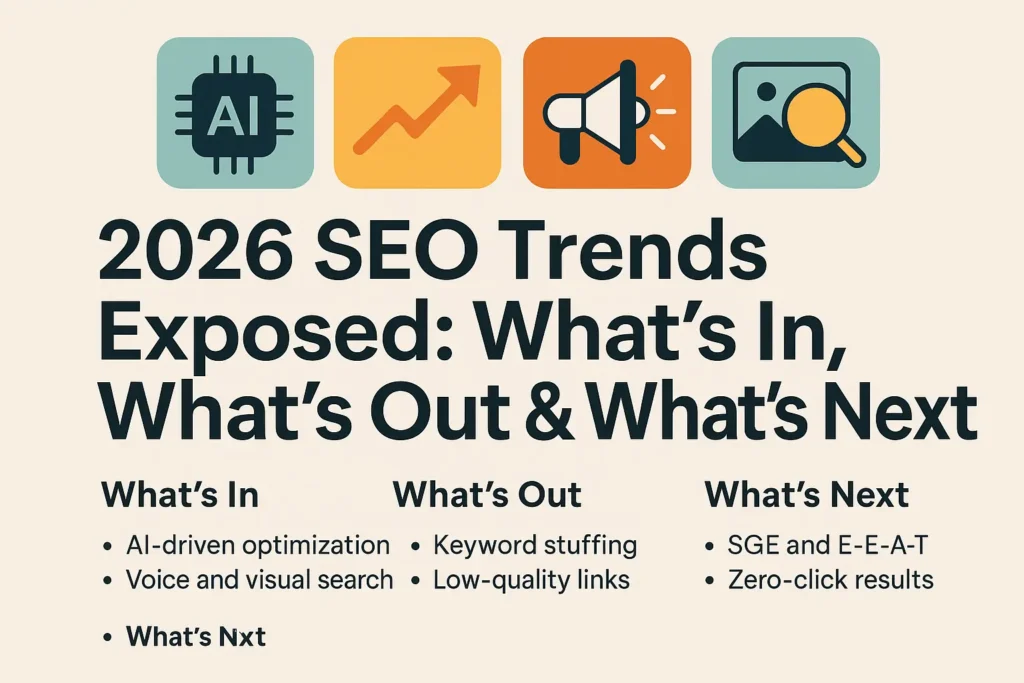
2026 SEO Trends Key Takeaways
-
SEO in 2026 is user-first and intent-driven
Algorithms prioritize context, relevance, and user experience over keyword frequency or backlinks. -
AI is transforming content strategy
AI tools now guide optimization, identify content gaps, and help tailor content to match search intent and voice patterns. -
Voice and visual search are dominating SERPs
Optimization now includes conversational language and image metadata to capture searches done through voice assistants and cameras. -
Old-school SEO tactics are dead
Keyword stuffing, low-quality backlinks, and generic guest posts no longer work—and can actively harm rankings. -
Google’s SGE is changing how users search
AI-generated summaries and multimodal queries (text, image, voice) are now part of the core search experience. -
Zero-click results are rising
Brands must aim for SERP visibility even without getting the click—through featured snippets, rich results, and structured data. -
E-E-A-T and real-time indexing are critical
Search engines now assess individual author expertise and prioritize up-to-date, fact-based content. -
Future-proofing SEO means staying human, not hacky
Building trust, using multimedia, focusing on brand voice, and demonstrating authority are the new SEO non-negotiables.
Search engine optimization has never stood still, and in 2026, it’s evolving faster than ever before. With Google rolling out AI-integrated search experiences, voice and visual queries dominating SERPs, and user-centric content becoming the new gold standard, the landscape of SEO has shifted dramatically. Gone are the days when backlinks and exact-match keywords could guarantee first-page results. Today’s SEO champions are those who understand behavior, context, and trust. Here your 2026 SEO trends by BeTopSEO explaind.
If you’re still clinging to tactics that worked in 2020 or even 2023, you’re risking digital extinction. But don’t worry—we’ve dissected the 2026 SEO trends to show you exactly what’s working now, what’s been left behind, and where SEO is heading next. Whether you’re a business owner, marketer, or content creator, this guide will give you the foresight and tools to stay ahead of the curve—and the competition.
Ready to decode the future of search? Let’s dive in.
The Evolution of SEO in 2026
How Search Engines Have Changed Their Rules
It’s 2026, and the way search engines operate has gone through another seismic transformation. At the heart of this evolution is Google’s ongoing shift from being a keyword-matching engine to a true intent-understanding system. Search engines no longer just scan for strings of text—they interpret context, semantics, and behavior in real time.
The algorithm updates of the last two years have heavily emphasized Search Generative Experience (SGE), integrating AI-powered summaries, follow-up queries, and multimodal results right into the SERPs. This means traditional organic rankings now compete with AI-driven answers, video carousels, and featured snippets more than ever before. If you’re not optimizing for SERP features, you’re missing valuable real estate.
Furthermore, mobile-first indexing is now a given, and site speed, accessibility, and structured data are no longer just ranking factors—they’re prerequisites. Google, Bing, and emerging players are all favoring experiential content: immersive, fast, and helpful.
Why User Intent Is More Important Than Ever
In 2026, the buzzword that really matters is intent. Every search is evaluated by the engine based on what the user really wants—not just what they typed. This has led to the rise of semantic SEO, where the content must reflect a deep understanding of related queries, synonyms, entities, and search context.
Search engines now prioritize EEAT—Experience, Expertise, Authoritativeness, and Trustworthiness—not only on a domain level but also at the individual author level. Articles that clearly convey firsthand experience, demonstrate subject matter expertise, and show a history of accurate information are rewarded. Content mills and faceless corporate blogs are rapidly losing ground.
To align with user intent, brands must now focus on content clusters that answer a query thoroughly, link contextually, and provide real value. Long-form content still wins—but only if it’s scannable, visually enriched, and offers a satisfying user experience.
In short, SEO in 2026 isn’t about tricking the algorithm—it’s about understanding your audience better than anyone else and delivering exactly what they need at the right moment. It’s a blend of psychology, UX, and technology.
Top 2026 SEO Trends That Are In
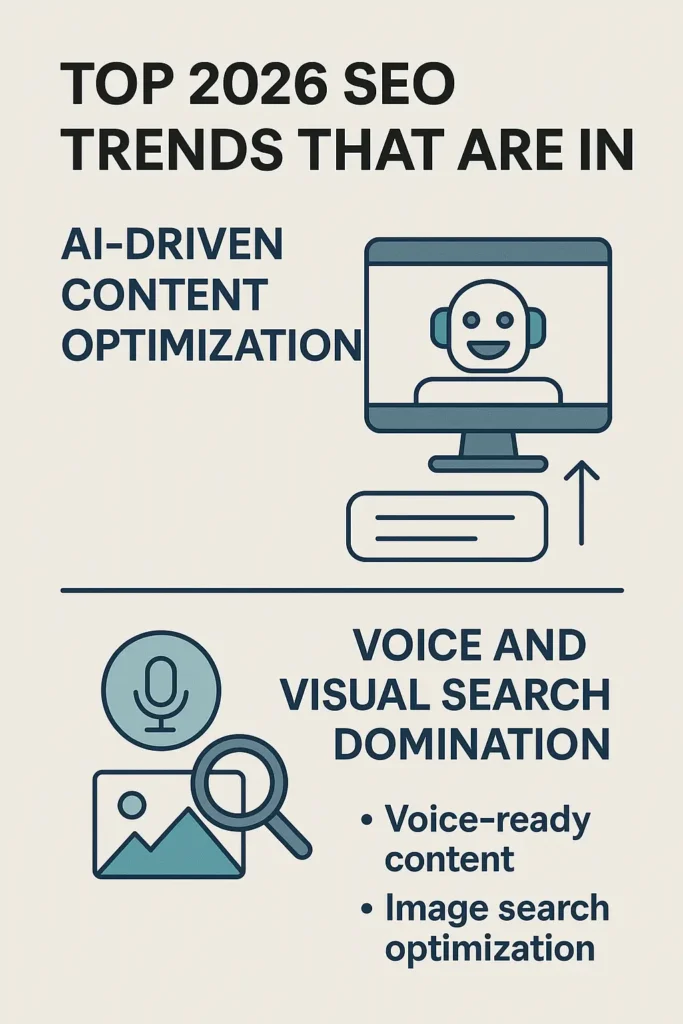
The Rise of AI-Driven Content Optimization
In 2026, AI has become the backbone of modern SEO strategies. But we’re not talking about simple content generators or keyword suggesters—today’s AI tools are fully integrated, context-aware systems that help marketers optimize content relevance, structure, tone, and topical authority in real time.
Advanced platforms now analyze SERP competitors, evaluate reader sentiment, and even predict the kinds of follow-up questions users are likely to ask. These insights are used to optimize everything from headers to CTAs, ensuring the content aligns with both search engine expectations and user behavior.
AI doesn’t replace content creators—it empowers them. Writers and strategists who embrace tools like Surfer SEO, Frase, or Clearscope are achieving far better rankings than those still relying on manual guesswork. These tools help fine-tune readability, detect content gaps, and ensure natural keyword distribution (hello, 1.30% density sweet spot!). It’s all about producing content that is deeply informative, expertly structured, and user-first.
Another rising star in this arena is predictive search intent analysis. Tools now help forecast how queries may evolve, enabling businesses to create content that meets future demand before it spikes. This trend reflects a broader shift: SEO is no longer reactive—it’s predictive.
Voice and Visual Search Domination
Voice search is no longer a novelty—it’s the norm. With smart speakers in most homes and virtual assistants in every pocket, more than 60% of online searches in 2026 are voice-based. Optimizing for this format means moving beyond text and embracing natural language, question-style queries, and succinct answers.
Think “How do I fix a leaking tap?” or “What’s the best coffee machine under $200?” These are not typed—they’re spoken, and Google is tailoring results accordingly. To rank, your content needs conversational structure, featured snippet readiness, and FAQ schema markup.
On the visual front, Google Lens and Pinterest Lens are pushing visual search to new heights. Users now search by uploading photos or screenshots, seeking products, places, or answers visually. Brands that leverage optimized image metadata, descriptive filenames, and schema-rich visuals are reaping the benefits.
For eCommerce, visual SEO is a game-changer. Products that appear in image search results with price tags, reviews, and availability info convert at significantly higher rates. It’s no longer just about how your product looks—it’s how your images are read and indexed.
So, what’s in for 2026? Human-like content supported by machine intelligence. Voice-ready, visually rich, and semantically aware pages that are built not just to be seen—but to be understood.
Outdated SEO Practices to Avoid in 2026
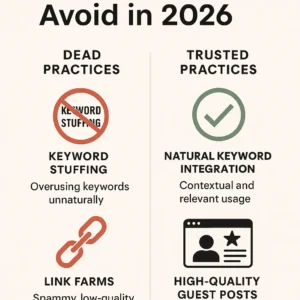
Why Keyword Stuffing and Link Farms Are Dead
If you’re still jamming the same keyword into every sentence or buying backlinks from shady directories, it’s time for a wake-up call. Keyword stuffing, once a go-to strategy, is now a red flag for search engines. In 2026, Google’s NLP algorithms are incredibly advanced—they can detect unnatural language patterns and penalize pages that try to manipulate rankings through over-optimization.
The same goes for link farms and private blog networks (PBNs). While backlinks still matter, it’s the quality—not the quantity—that drives SEO value today. Low-relevance, spammy links not only fail to help your rankings, but they also put your site at risk of algorithmic downgrades or manual penalties.
What’s worse? These outdated methods damage your user trust and engagement. Readers today are more discerning. They can spot forced keywords and irrelevant links a mile away. This leads to higher bounce rates and lower dwell times—metrics that directly impact your rankings under the experience-centric SEO model of 2026.
The takeaway? Focus on natural keyword integration, topic relevance, and earned backlinks through genuine value. It’s about building trust, not gaming the system.
The Decline of Low-Quality Guest Posting
For years, guest posting was a solid strategy to gain backlinks and expand reach. But by 2026, low-quality guest content is largely obsolete. Search engines now scrutinize not just the backlink—but the entire content ecosystem it lives in. If your article appears on a site known for thin content, outdated information, or generic blogs, it’s unlikely to pass the quality filters.
Google’s algorithms now evaluate the relevance, expertise, and freshness of the hosting site. Posts that lack original insights, regurgitate known facts, or are clearly outsourced without editorial oversight are being deprioritized. Simply put, context matters more than the link itself.
Instead, the focus has shifted to collaborative content, co-branded insights, and thought-leadership pieces that live on niche, topic-relevant platforms. These not only deliver stronger SEO signals but also amplify brand authority in your industry.
To stay competitive, businesses must invest in quality—from the pitch to the publish. That means understanding the audience of the host site, contributing real value, and ensuring every guest piece aligns with your broader content strategy.
What’s Next for SEO: Emerging Technologies & Signals
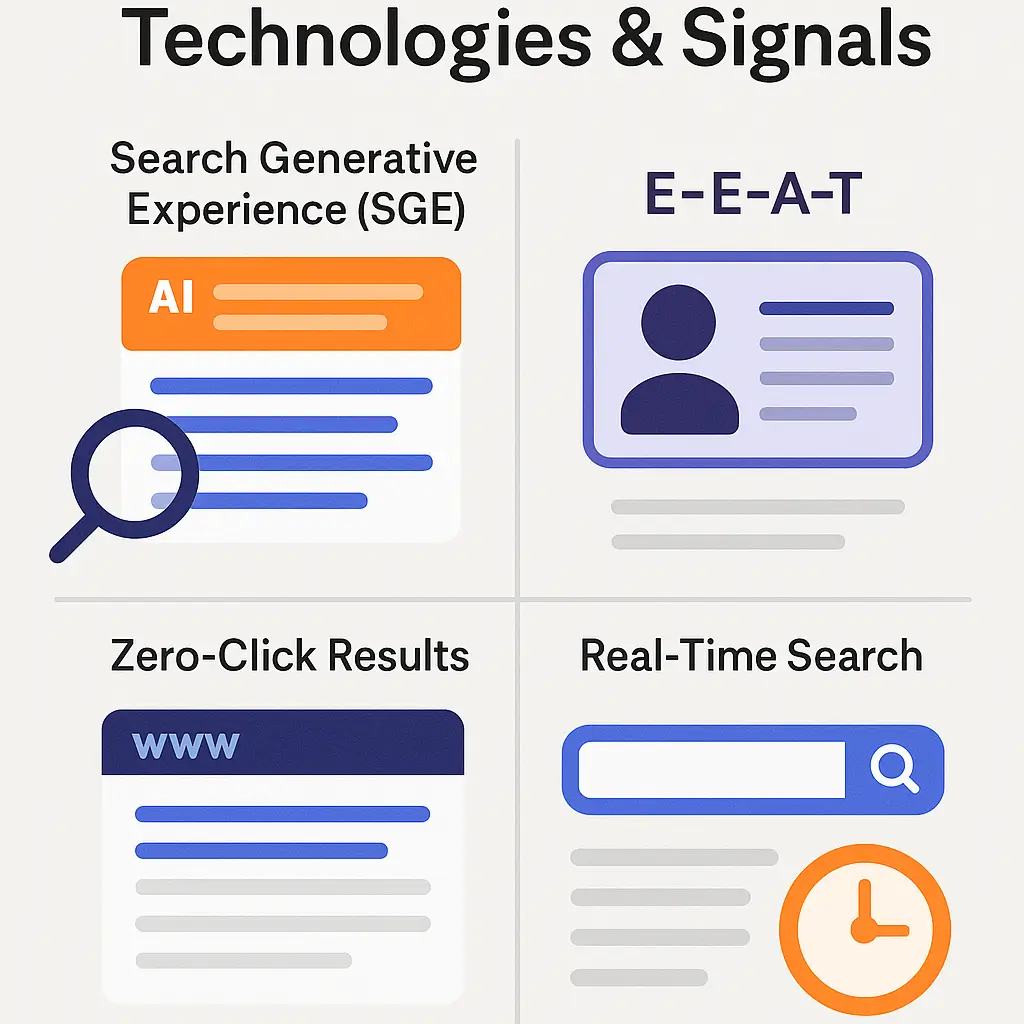
Google’s Search Generative Experience (SGE) and Beyond
2026 has brought us face-to-face with the full rollout of Google’s Search Generative Experience (SGE)—a seismic shift in how users interact with information. Instead of simply serving up links, Google now provides AI-generated overviews that summarize top answers, suggest related topics, and even pull from real-time data sources—all at the top of the results page.
For content creators and marketers, this means you’re no longer just competing for blue links—you’re competing for placement inside Google’s own summary box. To be featured, content must be factually accurate, semantically rich, and experience-backed. Shallow listicles and outdated guides won’t make the cut.
What’s more, search engines are leaning into multimodal queries, allowing users to combine text, voice, and images in one search. For instance, snapping a photo of a product and asking, “Where can I buy this nearby?” is now commonplace.
Other engines like Bing and Brave Search are also leaning into decentralized, ad-free models and privacy-first indexing, shaking up the dominance of traditional SEO ecosystems.
To stay visible in this evolving environment, your content must be search-assist compatible: AI-readable, well-structured, and reinforced with schema markup, author bios, and first-hand examples.
E-E-A-T, Zero-Click Results & Real-Time Search
The framework of E-E-A-T (Experience, Expertise, Authoritativeness, and Trustworthiness) continues to gain momentum in 2026. But now, it’s more nuanced than ever. Google doesn’t just look at your domain—it examines you. Individual authorship signals, verified credentials, and consistent niche publishing are crucial to building trust.
At the same time, zero-click results have expanded. Many queries now resolve directly on the SERP—weather updates, definitions, summaries, even how-to steps. So, while click-through rates are dropping, brand visibility and topical dominance are becoming more important. Being featured in zero-click formats—through structured data, featured snippets, or AI summaries—means your brand can win without the click.
Lastly, real-time indexing and trend-based content are rising stars. Google is now faster than ever at indexing live pages, especially if they cover breaking topics or update frequently. Tools like IndexNow and instant indexing APIs are becoming essential for news publishers, eCommerce platforms, and high-volume blogs.
In this landscape, winning at SEO means thinking ahead—anticipating trends, writing with authority, and optimizing not just for ranking, but for visibility within the new AI-powered interface.
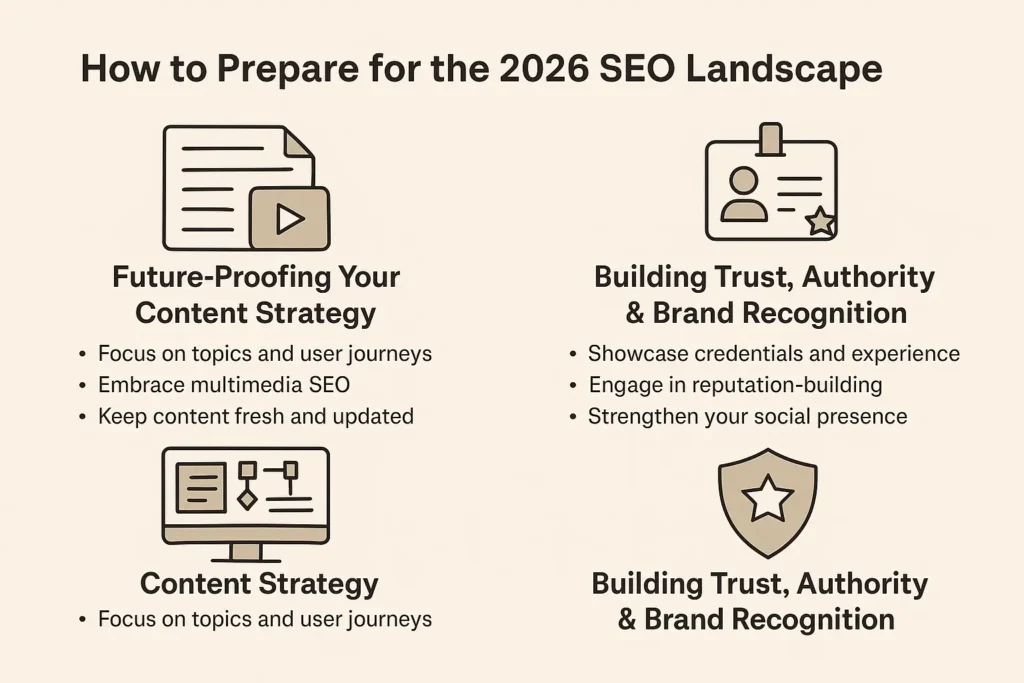
How to Prepare for the 2026 SEO Landscape
Future-Proofing Your Content Strategy
Surviving in SEO is no longer enough—you need to evolve ahead of the algorithm. Preparing for the 2026 SEO landscape requires a proactive, not reactive, content strategy.
First, shift your mindset from writing for rankings to writing for relevance. Instead of focusing solely on keywords, focus on topics and user journeys. Build content hubs with internal linking strategies that support topic authority, and regularly update your evergreen posts to stay accurate and competitive.
Second, embrace multimedia SEO. Videos, infographics, podcasts, and even AI-generated interactive elements like quizzes and tools are proving to be highly engaging and indexable. You don’t need to be everywhere—but you do need to offer value in the formats your audience prefers.
Use tools like Google Search Console, AnswerThePublic, and People Also Ask scrapers to keep a pulse on evolving queries. Be the answer before it trends.
Lastly, build content that’s not just findable, but memorable. That means strong brand voice, storytelling, and visuals that make your content distinctive. Add personal insights, expert commentary, and first-hand data wherever possible. These elements not only improve E-E-A-T, but also increase shares and citations—modern SEO gold.
Building Trust, Authority & Brand Recognition
In 2026, SEO and branding are more connected than ever. Algorithms now reward not just technical compliance, but human trust signals: who you are, what you’ve done, and how consistently you deliver value.
Here’s how to build that:
-
Showcase credentials and experience in your author bios. Connect your content to real people with proven expertise.
-
Engage in reputation-building. Earn mentions in reputable publications, industry podcasts, and social media discussions.
-
Implement review and rating schemas, especially if you’re a business or service provider.
-
Strengthen your social presence, not just for traffic, but to create a loop of branded search visibility.
-
Focus on UX—fast-loading, mobile-optimized, and accessible websites get favored in both rankings and user satisfaction.
In essence, the future of SEO belongs to brands that behave like experts, communicate like humans, and optimize like pros. If you build trust and provide value, the algorithm will follow.
Conclusion: The Future Belongs to the Adaptable
The world of SEO in 2026 is dynamic, intelligent, and ruthlessly user-focused. Old shortcuts no longer work, and staying stagnant is the quickest path to obscurity. But for those willing to evolve—adopting AI, understanding intent, and committing to value-driven content—the opportunity has never been greater.
Success in this new era won’t come from chasing the algorithm. It’ll come from building real authority, offering unique insights, and staying in sync with how people actually search. Whether you’re a solo creator or a digital marketing team, your job is clear: master the trends, stay agile, and lead with authenticity.
So ask yourself: Is your SEO strategy ready for 2026—or stuck in the past? Need help for best AI SEO in 2026, Conatct BeTopSEO for best lead geneartion, Google AI and AI tools reulsts for 2026 and beyond.