
By BeTopSEO · 16 min read
Quick answer: How can SEO help double glazing companies get more customers?
SEO helps double glazing companies get more customers by making their website and Google Business Profile visible when homeowners search for installers, replacement windows or quotes in their area. Better local visibility brings more relevant traffic, calls and enquiries, without paying for every click, though results take time and consistency.
Replacing windows is a big purchase. Most homeowners spend time researching before they ask anyone for a quote, and a lot of that research starts on Google. They search for double glazing installers near them, compare UPVC and aluminium windows, check reviews, and look at photos of finished jobs before they pick up the phone.
The UK double glazing market is crowded. National brands, regional installers, trade-only fitters and small local firms all compete for the same searches. If your company does not appear when a homeowner in your area searches, or appears but looks less trustworthy than the competition, the enquiry goes elsewhere.
This guide explains what SEO means for window, door and glazing businesses, how to approach it step by step, how long it takes, how it compares with Google Ads, and how to choose an agency without being sold false promises.
What is SEO for double glazing companies?
SEO (search engine optimisation) for double glazing companies is the work of making your website, Google Business Profile and online reputation easier for Google, and for AI search tools, to find, understand and trust, so that your business appears when local homeowners search for windows, doors and installation services.
In practice, that means:
- Pages that match what people search for, such as “UPVC windows”, “window replacement” or “aluminium bi-fold doors”.
- A Google Business Profile that is complete, accurate and active.
- Reviews and project photos that prove you do good work.
- A fast, mobile-friendly site that makes it easy to call or request a quote.
- Clear signals about where you work, so Google can show you to the right people.
SEO is not about tricking Google. It is about making sure the right homeowner finds the right page at the right moment, and that the page convinces them to get in touch.
Why SEO is important for double glazing businesses in the UK
Windows and doors are a considered purchase, and the buying journey usually involves several searches. SEO puts your company in front of people during that research phase.
The main benefits are:
- More visibility on Google. Showing up in the local map results and organic listings puts your name in front of people already looking for what you sell.
- More local customers. Local SEO focuses on the towns and postcodes you actually serve, which means fewer irrelevant clicks.
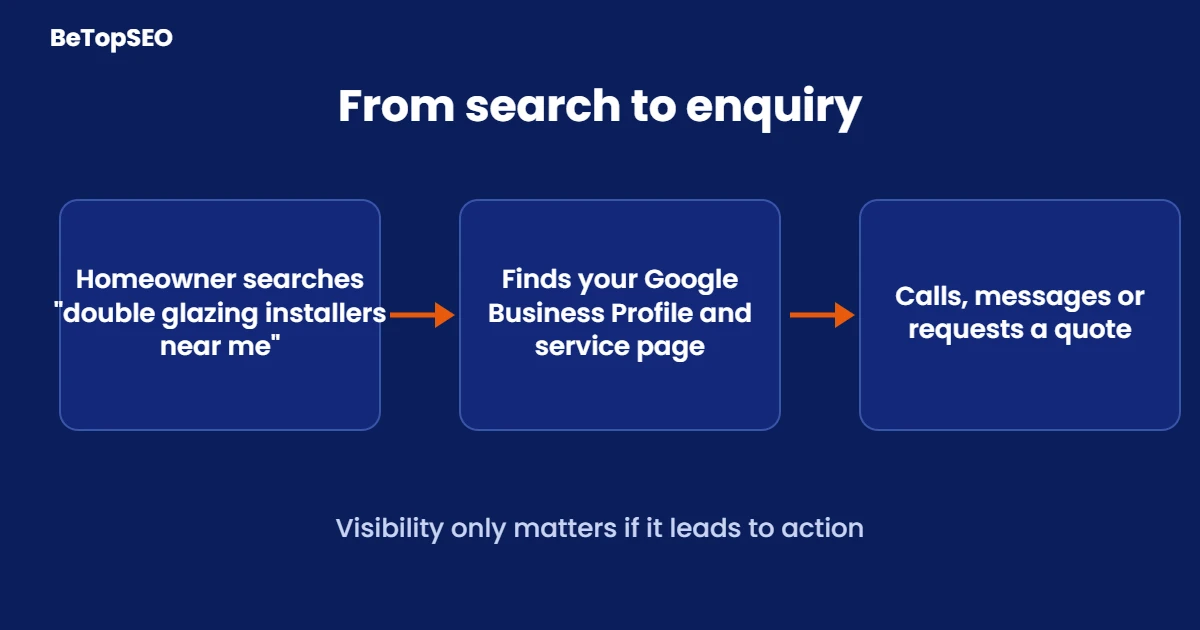
- More quote enquiries and phone calls. Visibility only matters if it leads to action. Good SEO pages are built to convert as well as rank.
- Better website traffic. Useful service pages and guides attract homeowners at different stages, from “how much do windows cost” to “who can fit them this month”.
- Trust before the first call. Reviews, accreditations, project photos and clear pricing information reassure homeowners before they speak to anyone.
- Long-term lead generation. A well-optimised page can keep producing enquiries for months or years without a fresh payment for each visit.
- Less reliance on paid advertising. SEO does not replace Google Ads, but it can reduce how much of your lead flow depends on ad spend.
Key takeaway: SEO is an asset you build. Done well, it keeps working in the background, but it needs steady effort rather than a one-off fix.
How double glazing companies can get more leads through SEO
The strategies below work together. If you have limited time or budget, start with Google Business Profile, service pages and tracking, then build outward.
Local SEO
Local SEO helps your company appear when someone searches for installers in their area, including the map results Google shows for “near me” searches.
The main building blocks are:
- A consistent business name, address and phone number across your website, Google Business Profile and directories.
- Service pages and location content that clearly say where you work.
- Reviews from customers in the areas you want to be found.
- Local mentions and links, for example from trade bodies, local news, suppliers and community sites.
If you have a showroom or office, it matters for map visibility. If you work from home or are service-area only, the set-up is slightly different (see below).
Google Business Profile optimisation
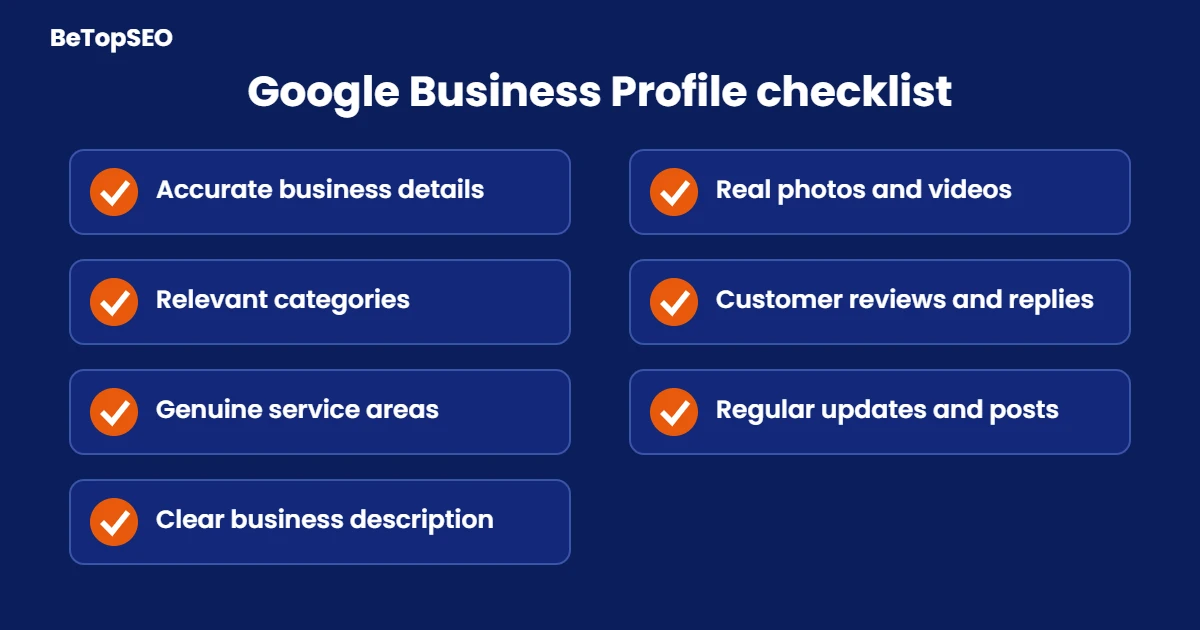
For many glazing companies, Google Business Profile (GBP) is the single most valuable free asset. Check each of these:
- Accurate information. Name, phone number, website link, opening hours and address (if customers visit you). Use your real trading name, not extra keywords.
- Relevant categories. Choose the primary category that best describes your main service, then add secondary categories only if they are true, for example window installation service, door supplier or conservatory builder. Check Google’s current category list rather than guessing.
- Service areas. If you travel to customers, list the areas you really cover. Do not list places you do not serve.
- Business description. Explain who you are, what you install, and where you work, in plain language. Avoid stuffing it with keywords.
- Photos and videos. Upload real installation photos, before-and-after shots, your team and your vehicles. Fresh photos show you are active.
- Customer reviews. Ask every happy customer and reply to every review, positive or negative.
- Regular updates and posts. Share completed projects, product ranges, seasonal offers and accreditations. Consistency matters more than volume.
Keyword research
Keyword research tells you what homeowners actually type and how those searches differ by service and place. You can do this with Google Search Console, Google autocomplete, “People also ask”, Google Business Profile performance data and paid tools such as Semrush or Ahrefs. Group keywords by intent:
- Ready to buy: “double glazing quotes”, “window replacement company”
- Comparing options: “UPVC vs aluminium windows”
- Local: “double glazing installers in Leeds”
- Research: “how long do double glazed windows last”
A longer list of examples follows in the keyword section below.
Website optimisation
Your site should make it obvious what you do, where you do it and how to contact you. Cover these basics:
- Page titles. Unique for every page, with the service and location where relevant, kept to roughly 50–60 characters.
- Meta descriptions. A short summary (about 150–160 characters) that gives a reason to click, such as a product range, accreditation or free quote.
- H1 and H2 headings. One clear H1 per page, with H2s that mirror the questions homeowners ask.
- Service pages. One page per genuine service (see next section).
- Internal links. Link related pages together, for example from a UPVC windows page to your window replacement page and your gallery.
- Calls to action. A phone number and quote button visible on every page, not just the contact page.
- Mobile-friendly design. Most local searches happen on phones, so test your pages on a small screen.
Service page SEO
Each major service deserves its own page. A single “Our services” page rarely ranks well for individual searches.
Where you genuinely offer them, create dedicated pages for:
- Double glazing installation
- UPVC windows
- Aluminium windows
- Window replacement
- Door installation (front, back, patio, bi-fold)
- Conservatories
- Window repairs, for example misted units, hinges and seals
Only create pages for services you actually provide. Pages for work you do not do attract the wrong enquiries and weaken trust.
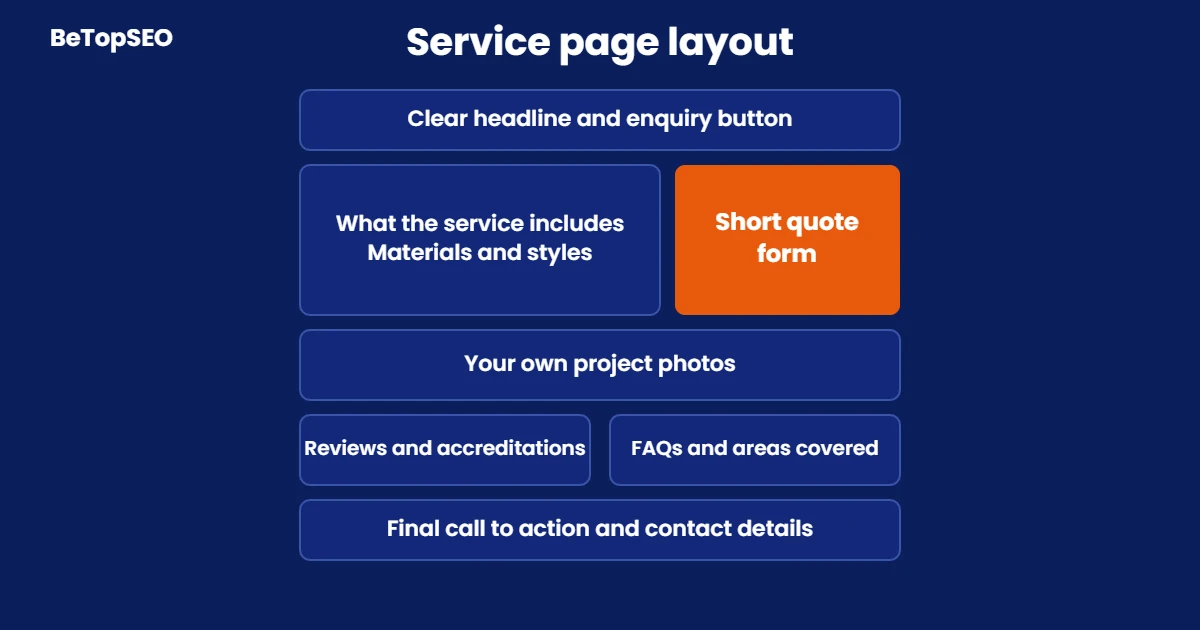
A good service page includes: a clear explanation of the service, materials and styles, a few project photos, accreditations, a short FAQ, relevant reviews, areas covered, and an obvious way to get a quote.
Location page SEO
If you cover several towns, location pages can help, but only when they are genuinely useful. Google’s spam policies target doorway pages, which are near-identical pages that differ only by place name.
To avoid thin or duplicate content, each location page should include something unique, such as:
- Real projects completed in that area, with photos
- Reviews from customers there
- Local considerations, for example conservation areas, period properties or common window styles
- Your actual coverage details, local contact options and travel arrangements
- Links to the relevant service pages
If you cannot say something genuinely useful about an area, do not build a page for it. A smaller set of strong pages beats dozens of copies.
Content marketing
Blog content supports your service pages by answering questions homeowners ask before they are ready to buy. Useful topics include:
- How to choose between UPVC, aluminium and timber windows
- What FENSA registration means and why it matters
- Signs your double glazing needs replacing
- How the installation process works from survey to sign-off
- Planning and conservation area considerations for windows
Write from real experience. Photos from your own jobs, honest pricing guidance and answers from your surveyors will always be more useful than generic text. Link each article to the relevant service page.
Technical SEO
Technical SEO makes sure search engines can access and understand your site:
- Website speed. Compress installation photos and avoid heavy sliders and plugins. Check Core Web Vitals in Google Search Console.
- Mobile usability. Buttons large enough to tap, readable text and no pop-ups blocking the page.
- Indexability. Important pages should be allowed to appear in Google, with no accidental “noindex” tags.
- Crawlability. A clear structure and working internal links so Google can reach every key page.
- XML sitemap. Submit it in Google Search Console so new pages are found quickly.
- HTTPS. Your whole site should load securely.
- Structured data where relevant. LocalBusiness schema and, for relevant pages, reviews, FAQs and breadcrumbs, help search engines interpret your content. Only mark up content that is visible on the page.
BeTopSEO offers technical SEO services in the UK if you want a specialist review.
Reviews and reputation
Genuine reviews help in three ways: they build trust with homeowners, they support local visibility, and they improve the chance that a visitor becomes an enquiry.
- Ask every customer after completion, while the job is fresh. Send a direct link to your Google review form.
- Respond to every review professionally, including negative ones.
- Mention accreditations such as FENSA, CERTASS or TrustMark on your website where you hold them, and show review profiles you actually use, such as Google, Trustpilot or Checkatrade.
- Never buy, fake or selectively gate reviews. It breaks platform rules and can damage your reputation.
Conversion rate optimisation
Traffic is only useful if people get in touch. Make that easy:
- Phone number visibility. Place a click-to-call number in the header on mobile.
- Quote request forms. Keep them short: name, phone number, postcode, what they need. Every extra field loses some people.
- WhatsApp, if you offer it. Many homeowners prefer to send a photo of their windows. Only add it if someone will reply promptly.
- Clear CTAs. Use specific wording such as “Get a free quote” or “Book a survey”.
- Trust signals. Accreditations, guarantees, years trading, insurance and review ratings near the form.
- Before-and-after projects. Show real transformations, including the property type and area.
- Testimonials. Short, specific and attributed (with permission).
- Installation photographs. Original photos beat stock images every time.
UK keyword examples for double glazing companies
Homeowners search in many different ways. Below are examples to use as a starting point for your own research. These are illustrative; we have not stated search volumes, because volumes vary by area and over time and should be checked in a keyword tool or Google Search Console.
Core service and “near me” keywords
| Type | Examples |
|---|---|
| Industry / business-focused | SEO for double glazing companies, double glazing SEO |
| Local intent | double glazing installers near me, double glazing companies near me, window installers near me |
| Service | double glazing installation, replacement windows, window replacement company |
| Material | UPVC window installers, aluminium window installers |
| Commercial | double glazing quotes, local double glazing company |
Location-based keywords
- Double glazing installers in London
- Double glazing companies in Birmingham
- Double glazing installers in Manchester
- Double glazing companies in Leeds
- Double glazing installers in Croydon
Use the places you genuinely serve. Weave them into service pages, location pages, your Google Business Profile and project write-ups naturally, rather than repeating them in every sentence.
Key takeaway: Do not rely on a single broad term. A mix of service, material, location and question-based searches gives you more chances to be found by people who are ready to enquire.
How to build an SEO strategy for a double glazing company
A practical plan for a small or medium-sized UK business:
- AuditBaseline and priorities
- KeywordsServices, places and questions
- CompetitorsFind gaps, not copies
- StructureOne page per real service
- Local SEOProfile and listings
- TechnicalSpeed, mobile and indexing
- ContentAnswer homeowner questions
- ReviewsGenuine, regular, replied to
- Links and PRRelevant and earned
- TrackingCalls, forms and enquiries
1. SEO audit. Review your current rankings, traffic, technical issues, Google Business Profile and enquiry tracking. This gives you a baseline and a priority list.
2. Keyword research. Build a list of service, material, location and question keywords. Map each one to a page that exists, or that you need to create.
3. Competitor analysis. Search for your main services in your main areas. Note who appears in the map results and organic listings, what their pages include, how many reviews they have and what they do better. Look for gaps rather than copying.
4. Website structure and service pages. Organise the site so each real service has its own page, with clear navigation and internal links between related pages.
5. Local SEO and Google Business Profile. Complete and maintain your profile, fix inconsistent listings, and build location content where you have something useful to say.
6. Technical SEO improvements. Fix speed, mobile and indexing issues, submit your sitemap, and add suitable structured data.
7. Content strategy. Plan a small set of helpful articles that answer common homeowner questions and link to your service pages. Publish steadily instead of in bursts.
8. Review and reputation strategy. Create a simple process to request reviews after every job and respond to them.
9. Link building and digital PR. Earn links from relevant, genuine sources: trade associations, manufacturers and suppliers, local press and sponsorships, and local business directories. Share noteworthy projects with local media. Avoid bought or spammy links.
10. Tracking enquiries and conversions. Set up Google Search Console and Google Analytics 4, track form submissions and clicks on your phone number, and use call tracking if possible. Ask new customers where they found you and record the answer. Review monthly.
How long does SEO take for double glazing companies?
SEO usually takes months rather than weeks to show meaningful results. No one can honestly promise a specific ranking, timescale or number of leads.
Some changes, such as improving a Google Business Profile, can show an effect relatively quickly. Others, such as building authority and ranking competitive service pages, take longer. What affects the timeline:
- Website condition: technical problems or thin pages will need fixing first.
- Competition: a crowded city is harder than a smaller town.
- Location: the areas you want to rank in change how competitive the work is.
- Content quality: pages that help homeowners tend to perform better than generic text.
- Website authority: established sites with good links and reviews usually have an advantage.
- SEO implementation: doing the right things properly matters more than doing many things.
- Consistency: SEO rewards steady work over months.
- Service areas: covering a wide area takes more time than focusing on a few towns.
A sensible approach is to set goals around leading indicators first (impressions, map views, calls, form submissions) and review rankings as a supporting measure.
SEO vs Google Ads for double glazing companies
SEO builds organic visibility that can compound over time; Google Ads buys paid visibility for as long as campaigns run and are funded. Most glazing companies benefit from understanding both.
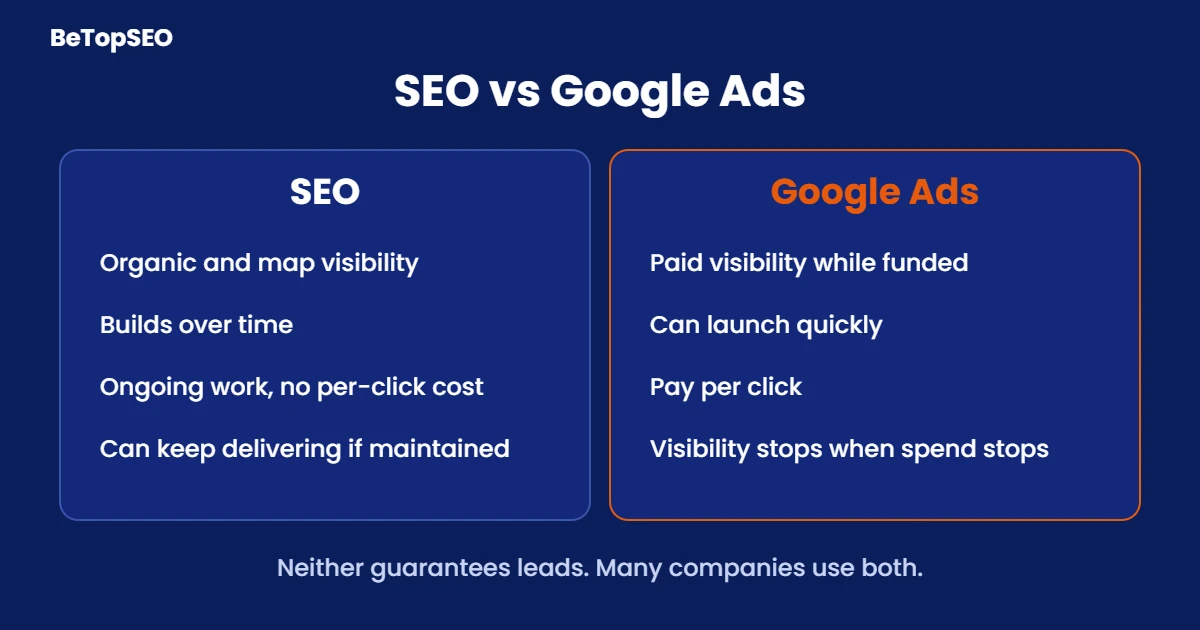
| SEO | Google Ads | |
|---|---|---|
| Type of visibility | Organic listings and local map results | Paid ads shown above or below organic results |
| Speed | Gradual; typically months | Campaigns can start quickly once set up |
| Cost model | Ongoing investment in work, not per-click | Pay per click, so costs continue while you advertise |
| Long-term value | Can keep delivering after the work is done, if maintained | Visibility generally stops when spend stops |
| Control | Less control over exact timing and positions | More control over budget, keywords and locations |
| Risks | Slow start; rankings can change | Wasted spend if targeting, landing pages or tracking are poor |
| Best for | Building a lasting lead source | Testing demand and adding short-term visibility |
Neither is a guarantee. SEO is not an overnight fix, and Google Ads does not guarantee leads. They can work together: ads can bring in enquiries while SEO builds, and search data from ads can reveal which terms convert. For cost detail, read our guide to Google Ads costs in the UK.
Common SEO mistakes double glazing companies should avoid
- Targeting only one broad keyword. “Double glazing” alone is highly competitive and often too vague. Cover services, materials and places.
- Ignoring local SEO. Many glazing searches show map results first. Neglecting your Google Business Profile means missing them.
- Having poor service pages. A few lines of text and a stock photo will not persuade anyone.
- Creating thin location pages. Swapping the town name on identical pages is a doorway-page risk.
- Keyword stuffing. Repeating “double glazing” in every sentence reads badly and does not help.
- Ignoring mobile users. If your site is awkward on a phone, you lose enquiries.
- Running a slow website. Large photos and heavy plugins slow pages down.
- Not collecting genuine reviews. Reviews drive both trust and local visibility.
- Having no clear enquiry CTA. Visitors should never have to hunt for your number or quote form.
- Buying spammy backlinks. They can do more harm than good.
- Publishing generic AI content. Text with no real expertise, local detail or original photos offers little value. Use AI as a drafting aid at most, and add genuine experience.
- Failing to track calls and enquiries. If you cannot see which pages produce enquiries, you cannot improve them.
How to choose an SEO agency for a double glazing business
Choose an agency that understands how homeowners buy windows, explains its plan in plain English, reports on enquiries rather than only rankings, and refuses to guarantee results.
When comparing agencies, look for:
- Industry understanding. Do they understand surveys, quotes, accreditations and the buying journey for home improvement?
- Transparent strategy. You should know what will be done and why, and who will do it.
- Technical SEO expertise. Can they diagnose speed, indexing and structure problems?
- Local SEO experience. Ask how they approach Google Business Profile, service areas and reviews.
- Content quality. Ask for real examples of their writing and how they involve subject experts.
- Reporting. Clear monthly reports that explain what changed and what happens next.
- Lead and conversion tracking. They should help you measure calls and enquiries, not just traffic.
- Realistic expectations. Be wary of anyone promising “page one in 30 days” or a specific number of leads.
- No guaranteed rankings. No one controls Google’s results, so a guarantee is a warning sign.
BeTopSEO is an SEO and digital marketing agency that helps businesses improve organic visibility, local search performance, website optimisation, content strategy and lead generation. You can see what we offer on our UK SEO services page, or learn how we approach AI search optimisation (AEO and GEO). If budget is your first question, our guide to SEO costs in the UK explains what influences pricing.
Frequently asked questions
What is SEO for double glazing companies?
SEO for double glazing companies is the process of improving your website, Google Business Profile and reputation so you appear when homeowners search for windows, doors or installers. It focuses on local visibility, useful service pages, reviews and fast, mobile-friendly pages that turn visitors into enquiries.
How can double glazing companies get more leads online?
Start with a complete Google Business Profile, dedicated service pages and genuine customer reviews. Add clear phone numbers and quote forms, build location content that is genuinely useful, and track calls and enquiries. SEO, Google Ads and good word of mouth can all contribute, depending on your area and budget.
How much does SEO cost for a double glazing company in the UK?
Costs vary with the size of your site, competition, service areas and the work involved, so there is no single price. Agencies commonly offer monthly packages or project fees. Ask for a clear scope, deliverables and reporting, and compare proposals on value rather than the lowest price.
How long does SEO take for a double glazing business?
SEO generally takes several months to show meaningful results, and timing varies. Website condition, competition, location, content quality and authority all matter. Be cautious of anyone promising a fixed timescale or guaranteed rankings, because search results are never fully within an agency’s control.
Is local SEO important for window installers?
Yes. Most customers want an installer who covers their area, and Google often shows local map results for these searches. A well-managed Google Business Profile, consistent business details, local reviews and service-area content help you appear for nearby homeowners who are ready to enquire.
Can SEO help a small double glazing company compete with larger companies?
Often, yes, particularly locally. Smaller firms can compete through strong local reviews, detailed service pages, real project photos and focused service areas. Larger brands may have bigger budgets, but a well-optimised local business can still win enquiries in the towns it serves, though results are not guaranteed.
Should double glazing companies use SEO and Google Ads together?
Many can benefit from both. Google Ads can provide paid visibility while a campaign runs, and SEO builds organic visibility over time. Ads data can also show which searches lead to enquiries. Neither guarantees leads, so track results and adjust your budget accordingly.
What keywords should double glazing installers target?
Target a mix of service terms (double glazing installation, window replacement), materials (UPVC, aluminium), “near me” searches, and location keywords for towns you serve, such as double glazing installers in Leeds. Check search demand in a keyword tool and match each keyword to a genuinely relevant page.
Ready to get more enquiries from Google?
If you run a double glazing, window or door business and want to understand how visible you are online, we can help. Talk to BeTopSEO about your website visibility, local rankings, SEO strategy and lead generation. We’ll talk through your current visibility, your goals, and the SEO opportunities available to your business. We’ll also explain what is realistic for your area and competition, with no pressure and no guarantees we cannot keep.
1 thought on “SEO for Double Glazing Companies: The Complete UK Guide to Getting More Leads”
Pingback: Google Maps SEO in Leeds: How to Rank Higher
Comments are closed.